
How to avoid pests in old furniture [and how to get rid of them]
With secondhand furniture becoming more and more popular it is wise to know how to avoid bringing home posts in thrifted furniture. Read how to spot, identify, treat and prevent bugs like woodworm and bed bugs in thrifted furniture.
If you love used furniture it is wise to know there might be some risks attached (pun intended) when you bring it into your home. Something may be considering that couch or those desk drawers as their home and they are ready to move in with you.

There are all kinds of bugs and critters that love old furniture as much as we do, so it is good to know what to do to prevent bringing pests home, how to treat infested furniture and how to protect your furniture from bugs in your home.
Below are some tips on what to look out for and how to avoid pests in your thrifted furniture.
Here is how to identify and get rid of furniture bugs and how to protect your furniture from future infestations.
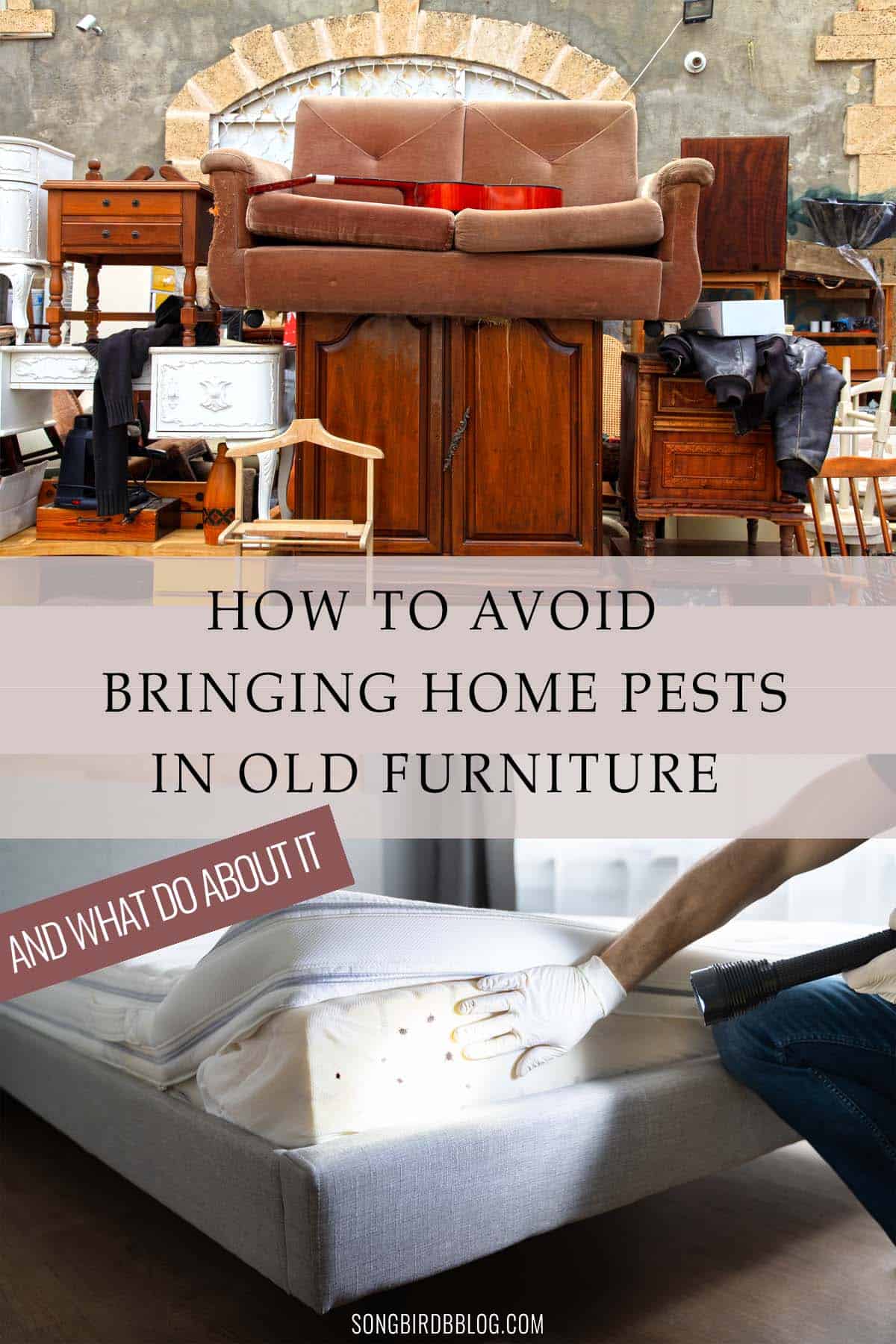
7 Tips for Avoiding Bringing Home Pests in Secondhand Furniture
Fighting the problem of pests in used furniture starts at the beginning. If you can avoid buying bug-infested pieces to begin with then you save yourself a lot of time and hassle later on. Although there are always some risks involved when thrifting, there are also quite a few things you can do to minimize your risks.
Use common sense
Make wise decisions when considering bringing a piece of furniture home, especially if you like to pick up pieces from the curb or at garage sales. Someone had a reason to put this dresser out for trash, maybe because it is in fact trashed.
Get knowledgable
If you are using a lot of second-hand furniture to decorate your home, get knowledgeable about the risks involved (reading this article is a good start!). Educate yourself on the kinds of bugs that live in used furniture and how to spot, identify and fight them. Don’t just trust the seller’s words.
Avoid buying upholstered furniture
Bed bugs and fleas prefer upholstery as their home. So buying upholstered furniture always comes with a risk of bed bugs. If you live in an area where bed bugs are common you might just want to step away from anything with layers of fabric. This is especially true for pieces of furniture that are used for sleeping like beds, couches, and recliners. I’d personally never buy those secondhand.
No matter how tempting it might be, upholstered furniture should never be rescued from the trash pile. If it’s meant for the garbage truck, there’s probably a good reason.
Inspect before buying
There are lots of tell-tale signs that there are creatures living in furniture. The little pests are very good at hiding, and a badly lit thrift store might not be the best place to diagnose a pest infestation. But nevertheless, take a really good look before buying and step away if you spot any potential problems (more on finding and identifying furniture bugs later)
Buy bug-resistant furniture
We already mentioned that upholstered furniture comes with a heightened risk. But there are also pieces of furniture that are actually safer than others. Anything made from wood like acacia, cedar, cyprus, eucalyptus, redwood, or teak is much less likely to carry pests.
Use an incubation chamber
Before actually carrying your newly thrifted furniture piece inside, put it in an ‘incubation chamber’ for a bit. Leave it outside or in a separate space like a garage or shed. Give the bugs a chance to show themselves and give yourself the opportunity for an in-depth and details inspection of the piece before using it.
Treat and protect before bringing it inside
If you find pests on your new piece consider how difficult it is going to be to get rid of them, and whether it is worth the risk.
Research treatment methods for the pest in question, and if you choose to dispose of the item, make sure you do so in a way that discourages others from picking it up and experiencing the same frustrating issue!
If there are no visible signs of insects or critters, it might still be wise to treat the piece as if there are bugs and protect and prevent a future infestation.
In any case be sure to (re)apply the best finish for your wood furniture piece, to make it last and prevent future problems.
How to Discover Bugs in Furniture
You found the perfect piece of secondhand furniture, it looked safe on first inspection, and the price was right, so you brought it home. Now what?
Related Reading: How to find the perfect piece of thrift store furniture
Now it is time for a better and more thorough inspection of this new piece of used furniture. There are five important steps to inspect secondhand furniture for pests.
Use white sheets and white gloves
Place your ‘new’ dresser, chair or cupboard on a white sheet. Put on some white gloves and start looking for signs of bug life. You might not see the little critters yourself but they do leave trash behind you can spot. Bed bugs look like black spots, wood boring insects leave sawdust behind, and mouse droppings look like tiny black beads. With your gloved hand, stroke and touch the piece everywhere, especially in the nooks and crannies of the piece.
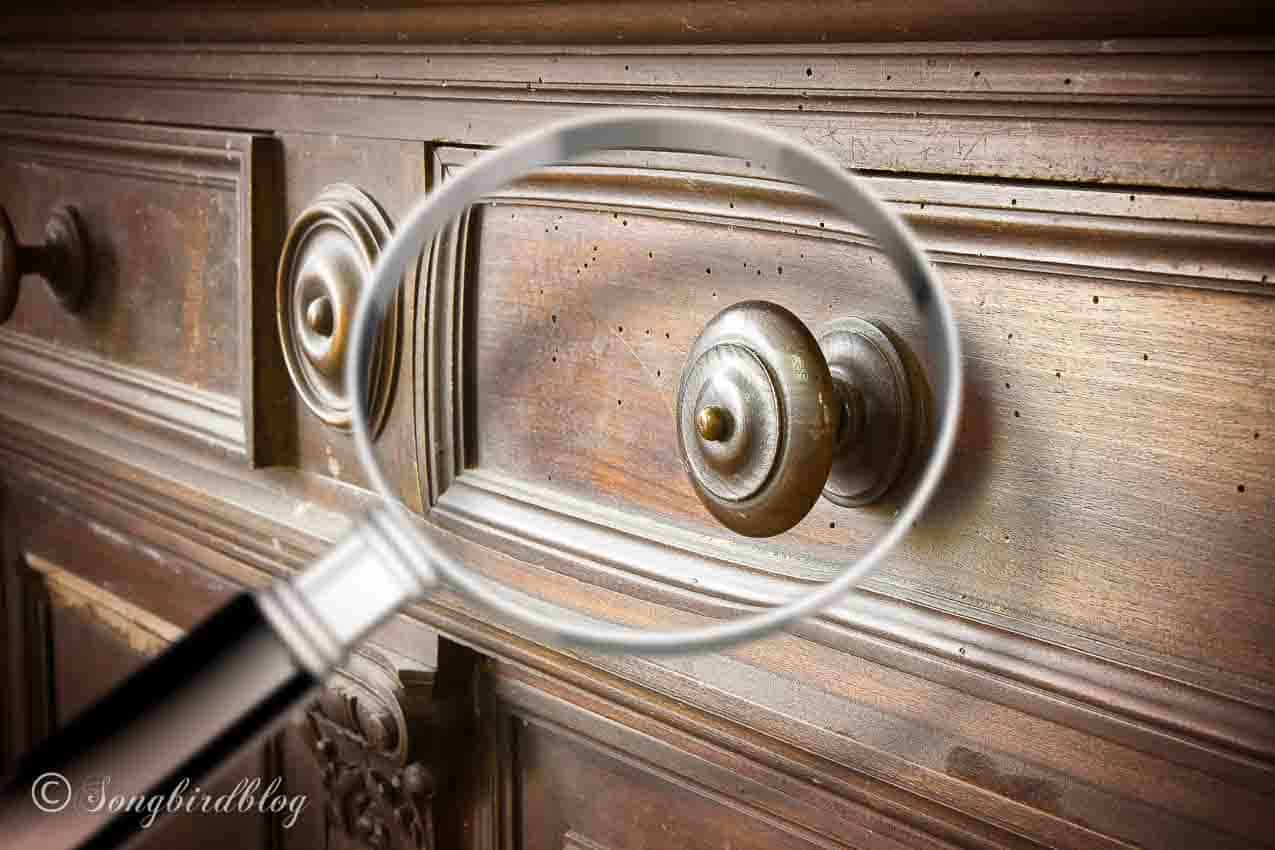
Use a flashlight and magnifying glass
Make this inspection even more effective by using a flashlight and a magnifying glass. There is a reason why everyone on CSI carried a flashlight. Shining into the corners, cracks, and crevices while looking through a loupe will give you a much deeper insight into the piece (pun intended again).
Tap and rattle
While taking a very close look at your thrifted furniture tap and rattle it. Shake it when possible, or lift it a bit and drop it back down. If you see sawdust falling out of the wood, you’ll know you have woodboring insects otherwise known as woodworms.
Turn it over and inside out
Do check your piece from every angle. Don’t forget the back, undersides, or inside the drawers or moving mechanisms. Give extra close attention to furniture joints, screw holes, hinges, and locks. Use your flashlight to guide your gaze so you don’t miss any spots.
Check behind paint and paper
If the furniture has been decorated before make sure that you check behind any loose paint, and behind wallpaper, or contact paper. No place is safe from these little pests.
DISCLAIMER
Pests in furniture can be a serious problem. I do not claim to be an expert and do not have professional qualifications in this field. I have bought and used secondhand furniture for years and on many occasions and have researched the pest problem extensively.
Please use common sense and educate yourself.
What is Eating my Furniture – How to Identify Pests in Furniture
While the types of pests found in furniture vary by region and country, there are some main culprits to watch out for: bed bugs, woodboring insects, and vermin.
Bed bugs are highly unlike in Europe, but they are becoming a major problem in North America. Woodboring insects are very common everywhere and almost impossible to avoid in really old wooden furniture. And yes, mice can live in couches and matrasses, even the ones that are in use. Let’s go more into detail about these common pests and how you identify and treat an infestation.
If you have found a little critter and can’t identify it, taking a picture and letting an app on your phone tell you what it is might be helpful. There are several useful apps for this purpose just search for pest or bug identifiers in your app store.
How to tell if furniture has bed bugs
Bed Bugs live in furnishings, fabrics, and upholstery and are very unlikely (but not impossible) to find on solid wood pieces. Check seams, creases, and crevices in upholstery for black spots that look a bit like tiny dirt (their poop), or red smears. Small black spots are the top indicator of bed bug activity. For the most part, bed bugs are drawn to areas humans spend a lot of time on (while sleeping) like beds and couches. They are unlikely to make their home on a dining room chair or barstool- though it isn’t unheard of.
How to get rid of bed bugs
Bed bugs are especially hard to get rid of. They are so tiny they can live and hide in the most invisible spots. They are also very hardy and can survive very harsh circumstances. And you can’t starve them, they can last years without eating.
If you find or suspect bed bugs to be present you can treat the furniture as follows.
Isolate. Keep the suspect away from other furniture. Make sure you are absolutely certain it is safe before using it and mixing it in with your other home decor.
Heat treatment. Bed bugs are very resistant but they can’t survive in heats over 110F / 43 C for more than 3 hours. Small pieces can be put in an oven, larger pieces can be packaged in thick black plastic and placed in the hot sun. Do use a wireless thermometer to check for the actual temperature inside the furniture.
Cold. If heat is not an option to fight the bed bugs, then cold might be. The creepy critters can not survive temperatures that are below 20F / 7C for 7 days or more. They can survive the cold for a short time but not for long. So in summer use the sun, and in winter let it sit outside for at least a week in freezing temps. If your winter doesn’t get so cold, you might find someone with an industrial freezer that lets you place the cupboard in a corner.
There are some home remedies to treat against bed bug infestations but be aware these might not be as successful as hoped.
Steam cleaning can work if you can reach every spot. I would not trust a steam cleaner on upholstered furniture for fighting bed bugs as it can not penetrate deep enough. But if a wood piece can stand the heat it could be steam cleaned.
You can use borax or baking soda to suffocate the bugs. Again this will not work on upholstery as the borax and baking soda itself do not harm the bugs. But if you cover the whole piece with a thick layer you will suffocate the bugs. This might work on very small pieces, especially if you can bury them completely.
Some people have had success with spraying (soaking) the furniture with rubbing alcohol, or tea tree oil. If you can get it into all the hidden places of the bed bugs this can work.
There are some more or less eco-friendly products available to regular buyers that claim to fight bed bugs successfully. I have no personal experience with these products but they come highly recommended. I’ve heard some good reviews about this one, this one, and this one.
A proper bed bug infestation in your home is not something you can home remedy. I’d advise bringing in professional expertise from a pest control company when the problem gets out of hand.
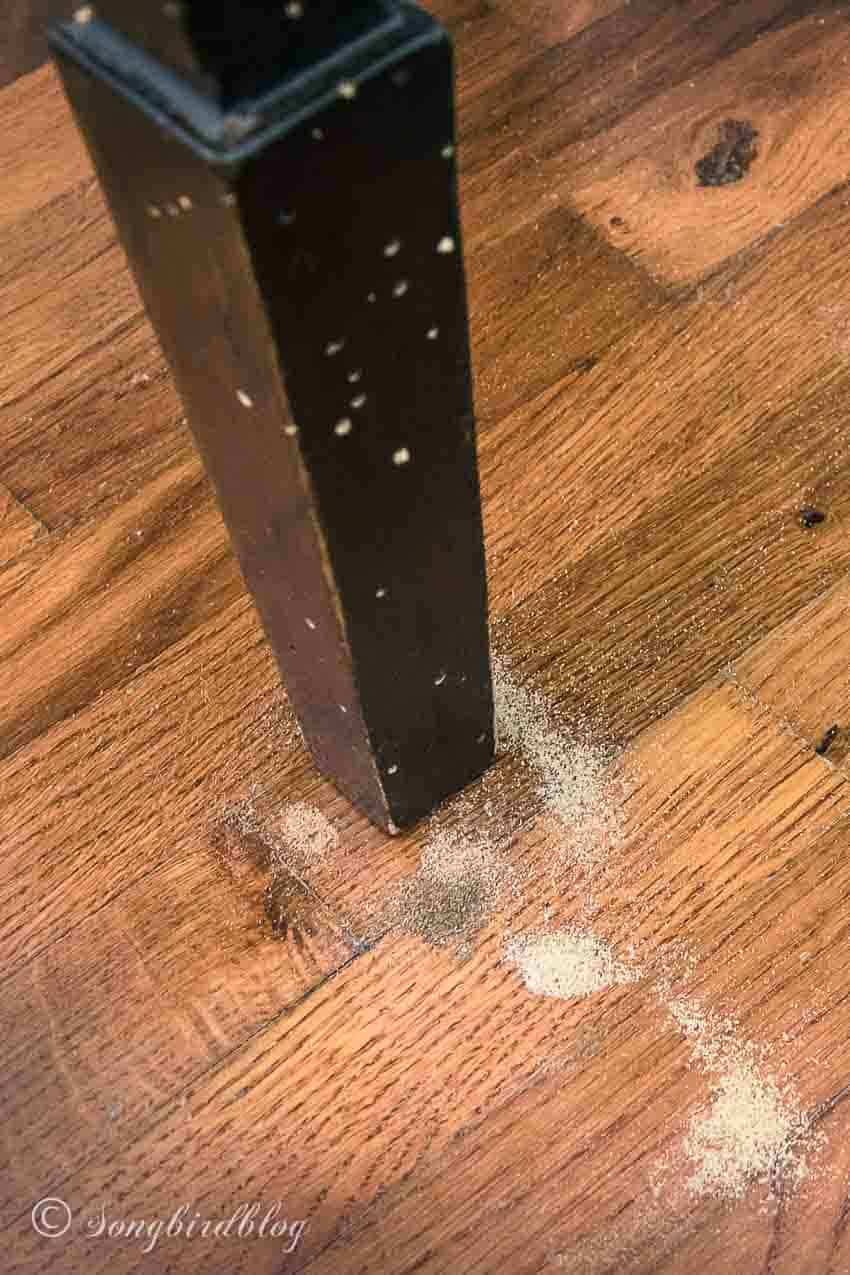
What are signs of bugs in wood furniture
There are several types of wood insects. Some insects eat the wood, and some just live in it. None of them are a good thing. Wood boring insects make tunnels into the wood for food or residence and are called woodworms. There are also ants and bees, termites that like to bite their way through the wood.
Look for these signs of bugs in wood furniture: upon close inspection, you’ll be able to tell if the wood looks “chewed up” in spots, If you see tiny holes and sawdust on or under your wooden furniture you may have woodworms lurking in the wood.
How to get rid of furniture bugs
It can be difficult but it is not impossible to get bugs out of wood furniture. There are several steps to get rid of them that involve cleaning and treating the furniture and preventing further infestations.
Thoroughly Clean Thrifted Furniture
Before bringing a new piece into your home, clean it thoroughly in your yard or driveway to be sure it’s clean and safe. Aside from the pests, there could be mold spores or mildew that might spread to other furniture or surfaces in your home, and it’s better to be safe than sorry! If you don’t have a driveway or yard, spread out a tarp over your rug, or clean the new piece over a non-porous floor that’s also easy to wipe down afterward. We have shared how to clean and get rid of musty smells in old furniture in another article.
Home remedies for Wood boring insects
There are several products that are aimed at killing and preventing wood boring insects (like this one against woodworks, and this one against ants and termites). They can only work on unfinished wood as they can not penetrate paint or stain. So either remove the finish or deeply soak the unfinished wood on the inside.
The product can be applied with a brush or sprayed on.
Wood worms do not like heat. So an additional heat treatment (like described for fighting bed bugs) can work here too. I have successfully treated and saved vintage wine boxes and wooden tools this way.
vermin in your furniture
A professional vermin exterminator once told me that mice live in mattresses and couches inside people’s homes. Student dorms are a special favorite apparently. Anywhere where people regularly eat and leave crumbs behind is apparently fair game for mice.
I personally wouldn’t like to deal with that. So if there are any signs of vermin in old furniture (holes, poop, or nests) I step away quickly and far and will most definitely not buy it.
If there is a vermin infestation in your couch or bed I’d call it a lost cause and call the trash pick-up guys.
How to Prevent Getting Pests in Your Furniture
Now that we know how to prevent bringing pests home, and how to get rid of the creepy creatures that hitched a ride on thrifted furniture it is important to know how to prevent any future infestations from occurring.
Here are some tips on how to protect your furniture from pests
Protect from moisture, and keep your furniture as dry as possible. Moisture is a friend for bacteria, mold, and mildew, and lots of pests. Keeping the air dry and letting your furniture sit in the sun from time to time can help prevent a lot of problems.
Clean regularly and thoroughly. Make sure your remove dirt, dust, and crumbs regularly. Use a product that will help in preventing pests like white vinegar or baking soda. Bugs of all kinds prefer dirty and neglected over clean and cared for.
Treat the wood. There are products specifically meant for preventing woodboring insects to move in. It is worth it to treat ‘new’ old furniture before bringing it inside your home. Adding a finish like a stain or paint will add an additional layer of protection.
Keep being vigilant. Keep your eye out for the telltale signs of bugs. They can travel in with all kinds of carriers, so always do a regular inspection when cleaning or moving your furniture.
How to Protect Your Furniture from Bugs
Used furniture is bought and sold without issue every day all over the world. I have done it many times, and I will continue to do it for a long time. With furniture flipping becoming a popular thing, the market for secondhand furniture is growing in all directions. And that is a good thing, why waste precious resources and money when something good and worthwhile is already out there?
So while I am all for thrifting as a way to furnish and decorate my home it is best to be smart and practical about it. Do your due diligence before bringing thrifted furniture into your home. Take the proper steps to detect and prevent bug infestations. And be aware that with all the pros of thrifting there are some cons attached.
Continue Reading: How to Prepare Old Furniture for Painting
